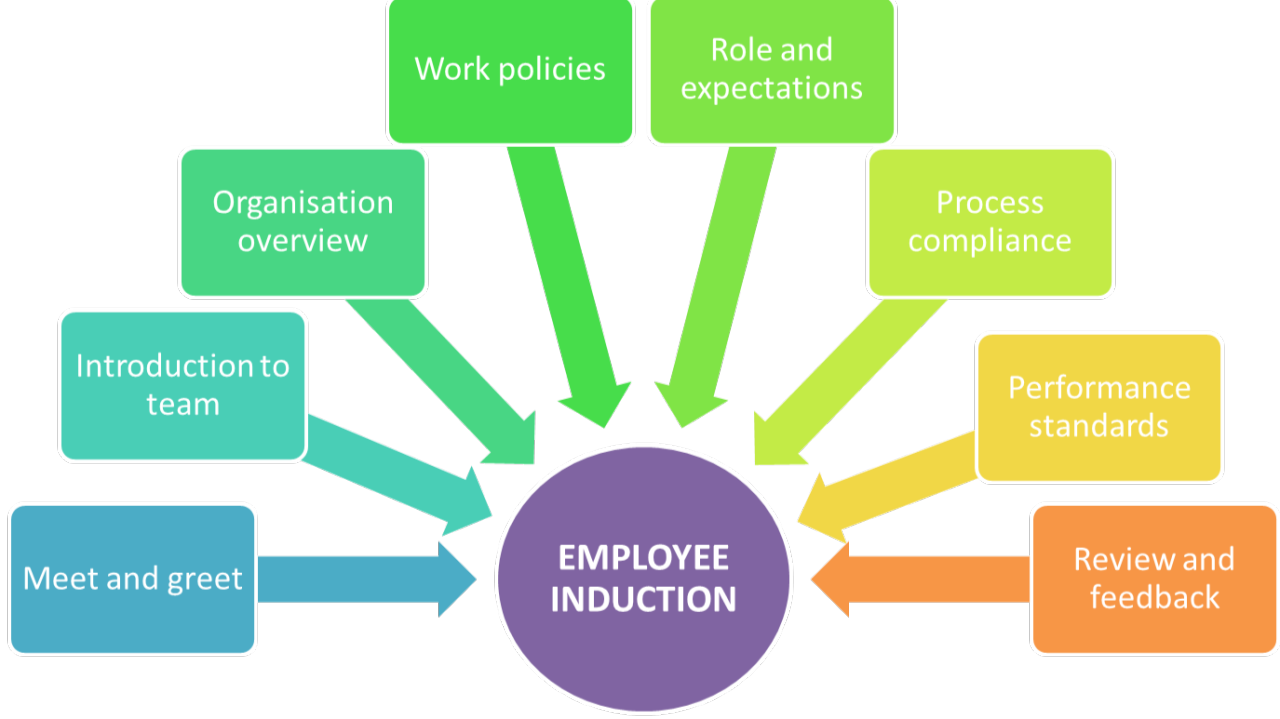
An employee's first few days within an organization significantly influence their perception of the workplace, level of engagement
Introduction
An employee's first few days within an
organization significantly influence their perception of the workplace, level
of engagement, and long-term commitment. A well-designed employee induction
program serves as the foundation for successful integration by helping new
hires understand the organization's culture, values, expectations, and
operational processes.
An effective induction program goes beyond
administrative formalities and compliance requirements. It creates a welcoming
experience, accelerates productivity, strengthens employee engagement, and
contributes to improved retention rates.
Understanding
Employee Induction
Employee induction is the formal process of
introducing new employees to the organization, their roles, colleagues,
workplace policies, and work environment. It is typically the first stage of
the broader onboarding journey and focuses on helping employees become familiar
with organizational expectations and procedures.
The primary objective of induction is to ensure
that employees feel informed, supported, and prepared to contribute effectively
from the beginning of their employment.
Why Effective
Induction Matters
Faster
Integration into the Organization
Employees who understand organizational
processes, structures, and expectations can adapt more quickly and become
productive sooner.
Improved Employee
Engagement
A positive induction experience creates enthusiasm,
trust, and a sense of belonging, increasing employee commitment to the
organization.
Reduced Early
Attrition
Many employees decide whether they see a future
with an organization within the first few weeks. Effective induction reduces
uncertainty and strengthens retention.
Enhanced
Compliance and Safety
Proper induction ensures employees understand
company policies, legal obligations, workplace rules, and safety procedures
from day one.
Stronger Employer
Brand
New employees often become ambassadors for the
organization. A professional induction experience enhances the organization's
reputation as an employer of choice.
Best Practices
for Employee Induction Programs
1. Begin with
Pre-Joining Engagement
Induction should begin before the employee's first
working day. Organizations should maintain communication between offer
acceptance and joining to create excitement and reduce uncertainty.
Pre-joining activities may include:
· Sharing
joining instructions and reporting details.
· Providing
information about the organization and business operations.
· Completing
documentation and compliance formalities.
· Preparing
workstations, system access, and equipment.
· Introducing
managers or team members virtually where possible.
2. Deliver a
Structured Welcome Experience
The first day should be organized, professional,
and welcoming.
Key activities include:
· Welcome
address by HR and leadership teams.
· Introduction
to company history, vision, mission, and values.
· Overview
of organizational structure and business operations.
· Employee
handbook and policy orientation.
· Office
or plant tour.
A positive first impression significantly
influences employee engagement.
3. Clearly Define
Roles and Expectations
Employees should receive clear information
regarding:
· Job
responsibilities.
· Reporting
relationships.
· Performance
expectations.
· Key
performance indicators.
· Probation
requirements.
· Working
hours and attendance expectations.
Role clarity reduces confusion and improves
accountability.
4. Provide
Compliance and Policy Training
Induction programs should include awareness
sessions on:
· Code
of conduct and ethics.
· Anti-harassment
and workplace behavior policies.
· Attendance
and leave rules.
· Information
security requirements.
· Data
privacy and confidentiality obligations.
· Disciplinary
procedures and grievance mechanisms.
Employees should understand both their rights and
responsibilities.
5. Prioritize
Health, Safety, and Environment Training
For manufacturing and industrial organizations,
safety induction is mandatory and should cover:
· Workplace
hazards and risk identification.
· Emergency
response procedures.
· Fire
safety protocols.
· Use
of personal protective equipment.
· Incident
reporting processes.
· Safe
operating practices.
Safety culture begins during induction.
6. Introduce
Organizational Culture and Values
Employees should understand not only what the
organization does but also how it operates.
Topics may include:
· Organizational
values and behaviors.
· Leadership
expectations.
· Collaboration
and teamwork principles.
· Customer
focus.
· Continuous
improvement culture.
· Diversity
and inclusion practices.
Culture alignment contributes to long-term
success.
7. Assign Mentors
or Buddy Programs
Assigning experienced employees as onboarding
buddies helps new hires:
· Navigate
informal workplace practices.
· Build
relationships more quickly.
· Resolve
questions comfortably.
· Integrate
into teams effectively.
Buddy programs improve confidence and engagement.
8. Use
Interactive Learning Methods
Traditional presentations alone may not effectively
engage employees.
Organizations should incorporate:
· Videos
and multimedia content.
· Interactive
discussions.
· Case
studies and practical demonstrations.
· Facility
tours.
· Question-and-answer
sessions.
Interactive induction improves knowledge
retention.
9. Implement
Departmental Induction
Beyond organizational orientation, employees
should receive department-specific induction covering:
· Department
objectives.
· Process
workflows.
· Key
stakeholders.
· Reporting
mechanisms.
· Departmental
policies and standards.
· Technical
systems and tools.
This ensures operational readiness.
10. Conduct
Follow-Up Reviews
Induction should not end after the first day or
first week.
Organizations should conduct review sessions
after:
· One
week.
· Thirty
days.
· Sixty
days.
· Ninety
days.
Regular follow-ups help identify concerns early
and improve employee experiences.
Leveraging
Technology in Induction
Digital induction platforms can improve
consistency and accessibility through:
· E-learning
modules.
· Electronic
document management.
· Employee
self-service portals.
· Learning
management systems.
· Automated
induction tracking.
Technology enables scalable and standardized
induction experiences across multiple locations.
Common Mistakes
to Avoid
Organizations should avoid:
· Overloading
employees with excessive information on the first day.
· Focusing
only on paperwork and compliance.
· Neglecting
manager involvement.
· Ignoring
cultural integration.
· Failing
to gather employee feedback.
· Treating
induction as a one-time event.
Effective induction is a continuous process
rather than a single activity.
Measuring
Induction Effectiveness
Organizations can assess induction success using
metrics such as:
· New
hire retention rate.
· Time
to productivity.
· Induction
completion rates.
· Employee
satisfaction scores.
· Early
attrition rates.
· Probation
confirmation outcomes.
· Manager
feedback scores.
Data-driven evaluation helps organizations
continuously improve induction quality.
Conclusion
Employee induction is one of the most important
investments an organization can make in its people. A structured and engaging
induction program helps employees understand expectations, embrace
organizational culture, prioritize safety, and become productive contributors
more quickly.
Organizations that adopt best practices in
induction create stronger employee experiences, improve retention, and build a
solid foundation for long-term organizational success. In today's competitive
business environment, an effective induction program is not merely an HR
process—it is a strategic business advantage.